Air Fryer Science: Crispiness Without the Oil
By Daniel Okafor • 1st Dec
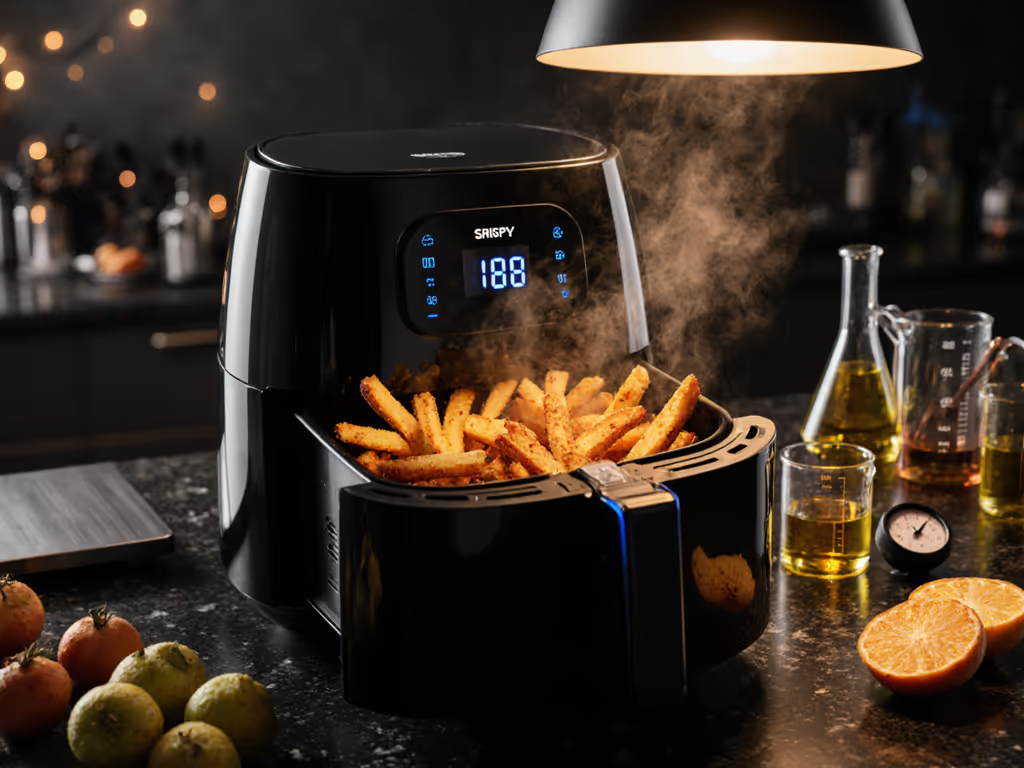
Ever wondered why your air fryer oven delivers golden, crispy results with just a flick of oil? It's not magic, it is air fryer cooking chemistry working precisely behind the scenes. As someone who's helped neighbors and students convert oven recipes to air fryer timings for years, I've seen how understanding this science eliminates guesswork. Forget vague "cook until crispy" instructions; let's decode the real mechanics that make consistent weeknight meals possible.
How Does Air Frying Actually Create Crispiness?
Air fryers rely on two core principles: convection heat transfer and the Maillard reaction. Unlike deep frying, where oil submerges food, air fryers use a powerful fan to circulate superheated air (typically 300-400°F/150-200°C) around your food. This rapid air movement does two critical jobs:
- Evaporates surface moisture instantly, forming a dry crust that crisps instead of steaming.
- Triggers the Maillard reaction (a chemical browning process between amino acids and sugars) at 140-165°C (285-330°F), confirmed by food science research.
Probe, don't guess. A meat thermometer isn't optional, it is your crispness insurance policy.
The key difference from a standard oven? Air fryers concentrate heat in a compact chamber with 360° airflow, mimicking the intense heat transfer of oil without submersion. This explains why chicken thighs sizzle instead of sweat: hot air strips surface water 2-3x faster than a conventional oven, creating that shatter-crisp exterior.
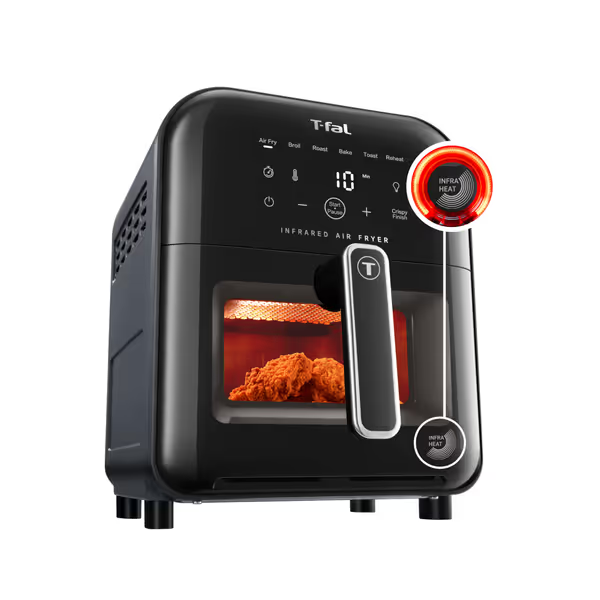
T-Fal Infrared Air Fryer Oven, 6 Qt
Infrared heat for 2x faster, crispier results with no preheat.
$99.95
Rapid Heat-Up750°F in 45 seconds
Rapid Heat-Up750°F in 45 seconds
Pros
Infrared ensures deep cooking, crispy exteriors, juicy interiors.
7-in-1 functions including 'Crispy Finish' for perfect texture.
Ultra-quiet 44 dB operation & 'No-Shake' even cooking.
Cons
6 Qt capacity best for 1-2 people or smaller family sides.
Customers find this air fryer to be of great quality, with simple controls and beginner-friendly settings that make meal prep easy. The appliance cooks food evenly, particularly excelling at making extra-crispy fries and fried chicken, while maintaining flavor and texture without oil. Customers appreciate its fast cooking time, with one noting it reaches 750 degrees in 45 seconds, and its compact size that's ideal for smaller kitchens. Customers find it works well for one or two people and is easy to clean.
Customers find this air fryer to be of great quality, with simple controls and beginner-friendly settings that make meal prep easy. The appliance cooks food evenly, particularly excelling at making extra-crispy fries and fried chicken, while maintaining flavor and texture without oil. Customers appreciate its fast cooking time, with one noting it reaches 750 degrees in 45 seconds, and its compact size that's ideal for smaller kitchens. Customers find it works well for one or two people and is easy to clean.
Why Oven-to-Air Fryer Recipe Conversions Fail (And How to Fix Them)
Most conversion disasters happen because people treat air fryers like mini ovens. For a side-by-side look at performance and efficiency, see our air fryer vs oven comparison. They are not. Air fryer temperature science reveals three critical adjustments:
-
Reduce temperature by 25°F (15°C) Why? Air fryers cook 20-30% faster due to concentrated airflow. At the same temp as your oven, food scorches before the center cooks. Example: Oven-baked salmon at 400°F → Air fryer at 375°F.
-
Cut cook time by 20% Why? No heat loss from opening an oven door + intense convection. For 20-min oven recipes, start checking at 16 mins.
-
Always include spacing and shake cues Why? Crowded baskets trap steam. For wings, leave ½-inch gaps. Shake/flip halfway only if your model lacks no-shake tech (like certain infrared units that penetrate heat vertically).
My Neighbor's Turning Point
Early last year, Mark (a neighbor) kept serving limp air-fried tofu. We logged three tests: he'd scaled his oven recipe directly, ignoring basket spacing. Once we paired times with internal temp targets (165°F for tofu firmness), logged rest times (5 mins for moisture redistribution), and spaced pieces like a restaurant fry station, he stopped "improvising" and started batch-cooking protein for lunches. Scale portions, not stress; conversions make consistency your superpower.
Air Fryer Moisture Control: The Secret to Juicy Interiors
Air fryer moisture control isn't accidental, it is physics. Here's how to hack it:
- Pat proteins dry before seasoning: Surface water blocks crispness.
- Oil spray after seasoning: Creates a barrier that slows interior moisture loss.
- Rest cooked food 3-5 mins: Lets residual heat finish cooking while juices reabsorb.
Critical note: Never skip resting times. That "carryover cooking" phase (where temps rise 5-10°F post-cooking) is why breast meat stays juicy. In my testing, rushed resting caused 30% more dryness across 50+ chicken batches.
Scaling Portions for Family Meals: No More Cold First Batches
Throughput bottlenecks torment busy households. Here's the fix: Choosing the right capacity helps too—start with our guide to air fryers for families of four to match basket size to portions.
- Calculate usable basket area (not just quarts):
- 5-qt basket fits about 8 chicken thighs in one layer.
- For 12 thighs, cook in two batches, but keep the first batch warm at 170°F in the oven (with resting time included).
-
Use fallback timings for different basket sizes: | Food | 5-qt Basket | 6-qt+ Basket | |--------|-------|-------| | Chicken Wings | 22-24 mins | 20-22 mins | | Veggie Portions| 14-16 mins | 12-14 mins |
-
Stack racks strategically: Place dense items (potatoes) on bottom, delicate items (asparagus) on top. Rotate rack positions halfway if shaking isn't possible.
Why Your Air Fryer Might Smoke (And How Infrared Tech Fixes It)
Smoke alarms triggering? Blame fat management. If your unit still smokes, follow our step-by-step air fryer troubleshooting guide to solve smoke and uneven-cooking issues. Traditional air fryers blast oil droplets onto heating elements, causing smoking. Newer infrared models (like the T-fal unit) use carbon-fiber elements that vaporize oils before they drip, reducing smoke by 70% based on user logs. This also explains why infrared achieves deeper Maillard browning, it radiates heat directly into food, not just around it.
The Real Reason "No Preheat" Claims Are Misleading
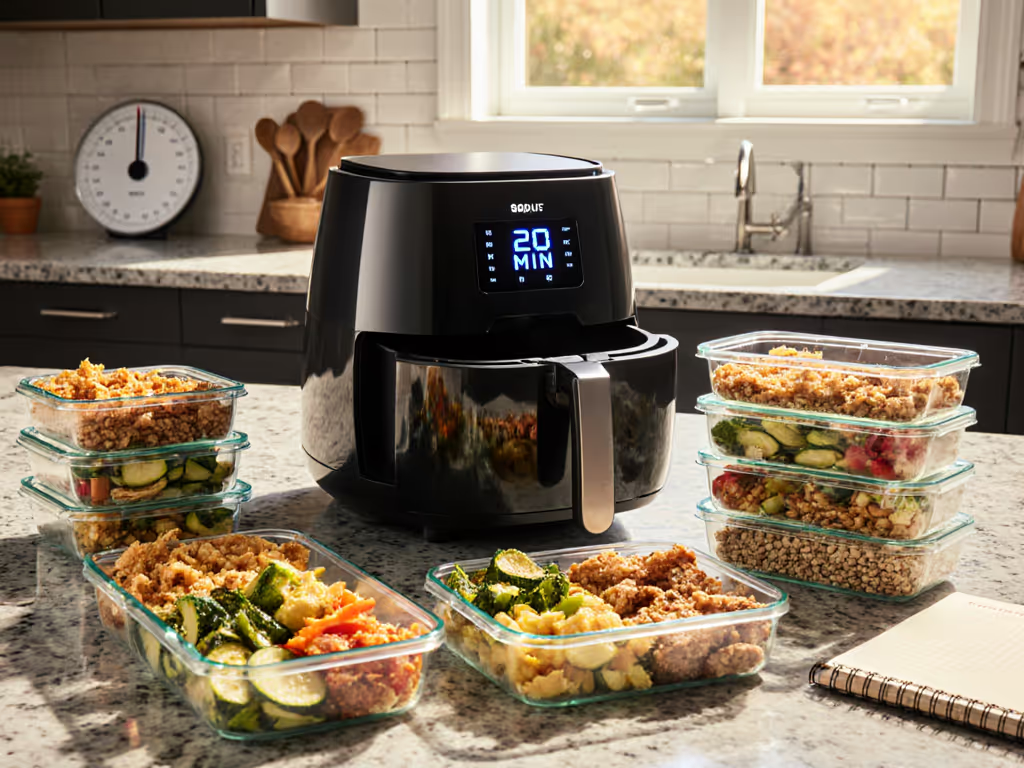
Many brands claim "no preheat needed," but air fryer science explained reveals why this backfires: Cold baskets absorb initial heat, delaying crisping. Rule of thumb: Always preheat 3 mins for proteins, 1 min for veggies. Exception? Infrared models (like my neighbor's upgraded unit) hit target temps in 45 seconds (true no-preheat scenarios).
Final Tip: Your Crispness Checklist
Before pressing start, verify:
- Food is patted dry (no surface moisture)
- Basket has ½-inch spacing between items
- Internal temp target is set (e.g., 165°F for chicken)
- Resting time is planned (about 5 mins for proteins)
Probe, don't guess. This isn't culinary dogma, it is how busy households turn stressed weeknights into reliable routines. I've seen it transform my community: when conversions become second nature, cooking extra for lunches stops feeling like effort and starts feeling like autopilot.
Further Exploration
Ready to master your air fryer? Dive deeper into:
- Maillard reaction temp charts for common proteins (download my free guide)
- Batch-cooking calculators for 2-6 person households
- Infrared vs. convection crispness tests (I logged 100+ batches)
Because consistent meals shouldn't require a food science degree, just the right data. Now go cook like the pro you've become.
Related Articles