Crispy Leftovers or Fast Reheating? Air Fryer vs Microwave
By Aiko Tanaka • 30th Nov
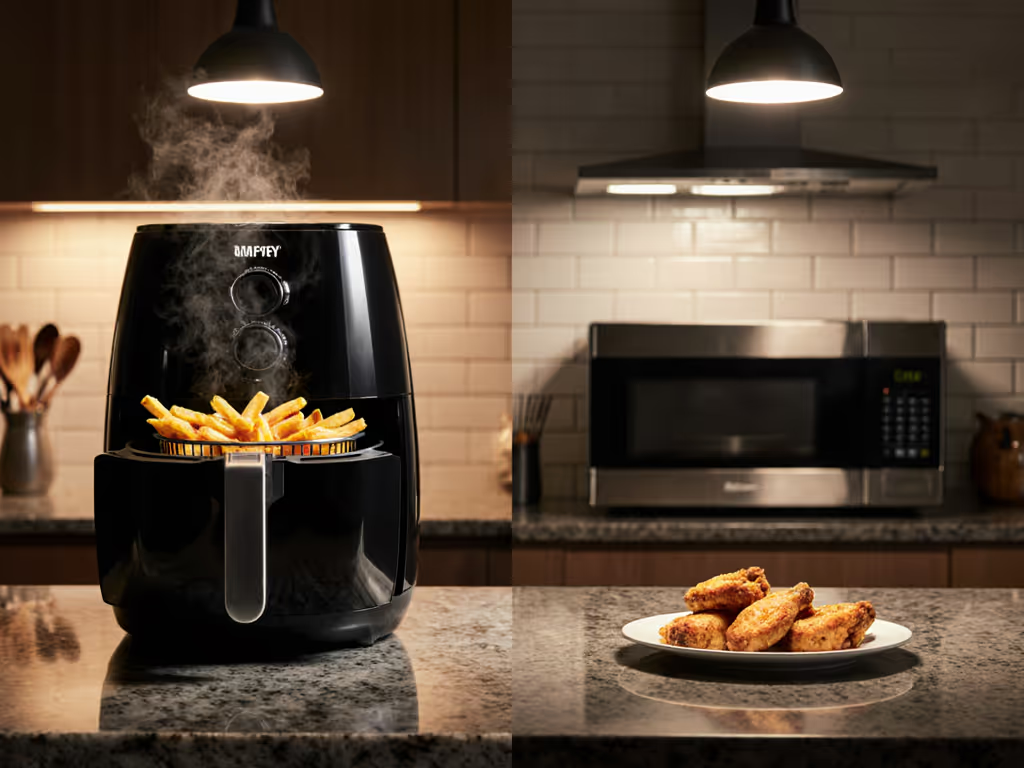
Most households face the same morning-after dilemma: that perfect slice of pizza from last night's dinner has transformed into a soggy, unappetizing mess. Is your kitchen equipped for air fryer vs microwave reheating battles, or are you settling for compromised meals? Finding the best appliance for leftovers isn't just about convenience, it's about preserving the integrity of your food while respecting your kitchen workflow. After measuring reach, rack fit, and cleanup time across dozens of setups, I've discovered that your reheating choice impacts far more than just texture, it affects how often you'll actually use the appliance.
The Reheating Reality Check
Why Leftover Texture Matters More Than You Think
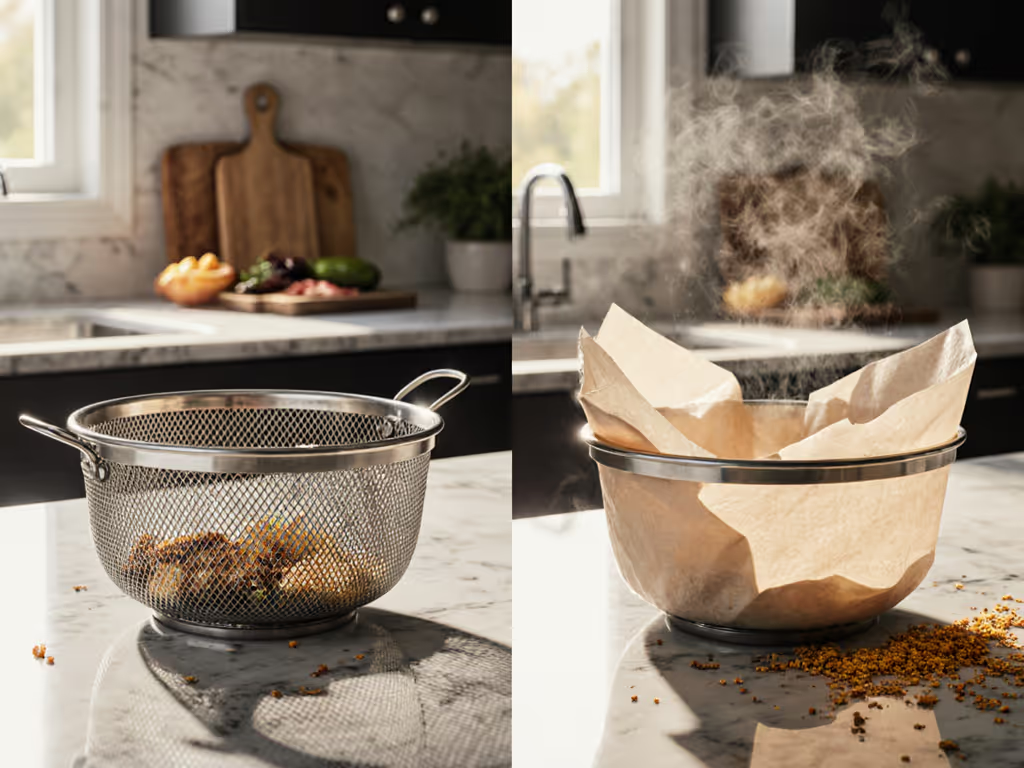
That Saturday morning scrub session taught me something valuable: when you're spending thirty minutes wrestling onion crumbs from a wire basket while your dishwasher refuses the awkward drawer, you're not just cleaning, you're calculating whether this appliance will ever earn its counter space again. The turning point wasn't just about stubborn debris; it was realizing that if cleanup stalls, the machine gathers dust (design for glide). This isn't about perfectionism; it's about practical sustainability in your kitchen workflow. If basket grime is your bottleneck, our deep-clean guide shows quick fixes for crumb traps and stuck-on grease.
Consider these common reheating failures:
- Soggy pizza crust that bends like a wet newspaper
- Rubbery chicken that pulls teeth rather than melts in your mouth
- Limp french fries that surrender before they reach your lips
- Cold centers with scalding edges that create dangerous eating experiences
These aren't mere culinary disappointments; they represent wasted food, repeated cooking cycles, and the slow erosion of your kitchen confidence. When your reheating tool fails consistently, you stop using it. That's why your appliance choice must align with your actual kitchen reality, not just marketing promises.
The Technology Breakdown
How They Actually Work
Understanding the fundamental mechanics explains why these appliances deliver such different results. Let's examine the physics behind each:
Microwave ovens use electromagnetic waves to vibrate water molecules throughout your food. This method heats from the inside out, which explains why you can have a scalding hot center while the exterior remains cool. Modern units like the Samsung MC12DB8700CKAA employ Power Convection technology that combines traditional microwave energy with circulating hot air, bridging the gap between speed and texture.
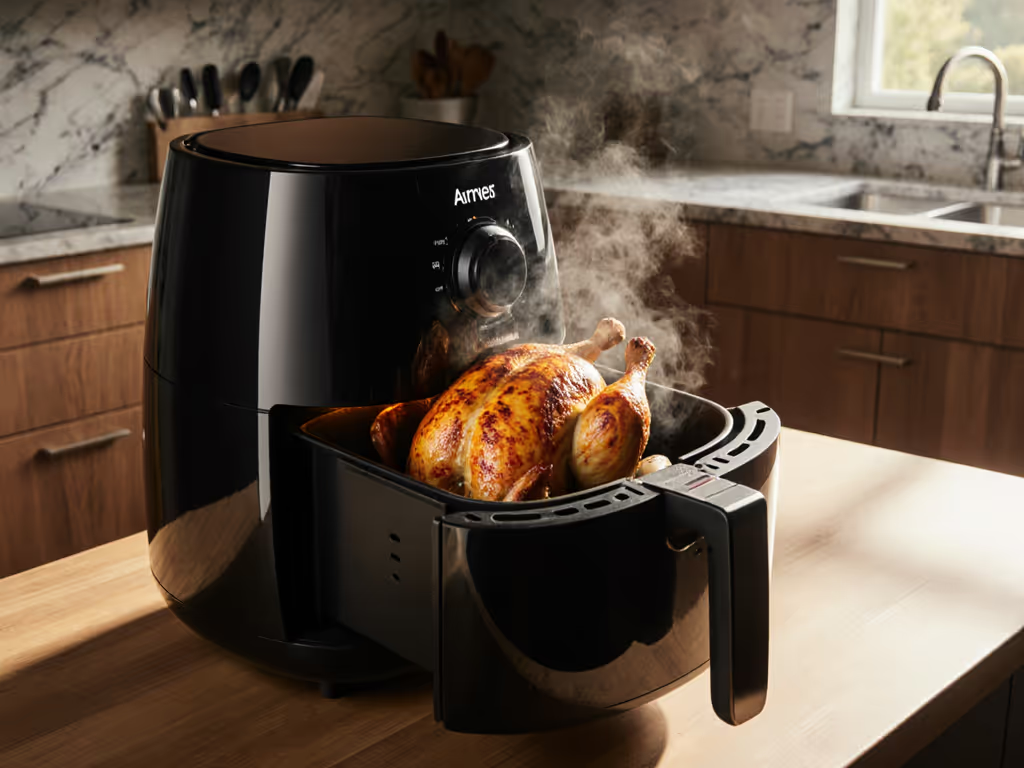
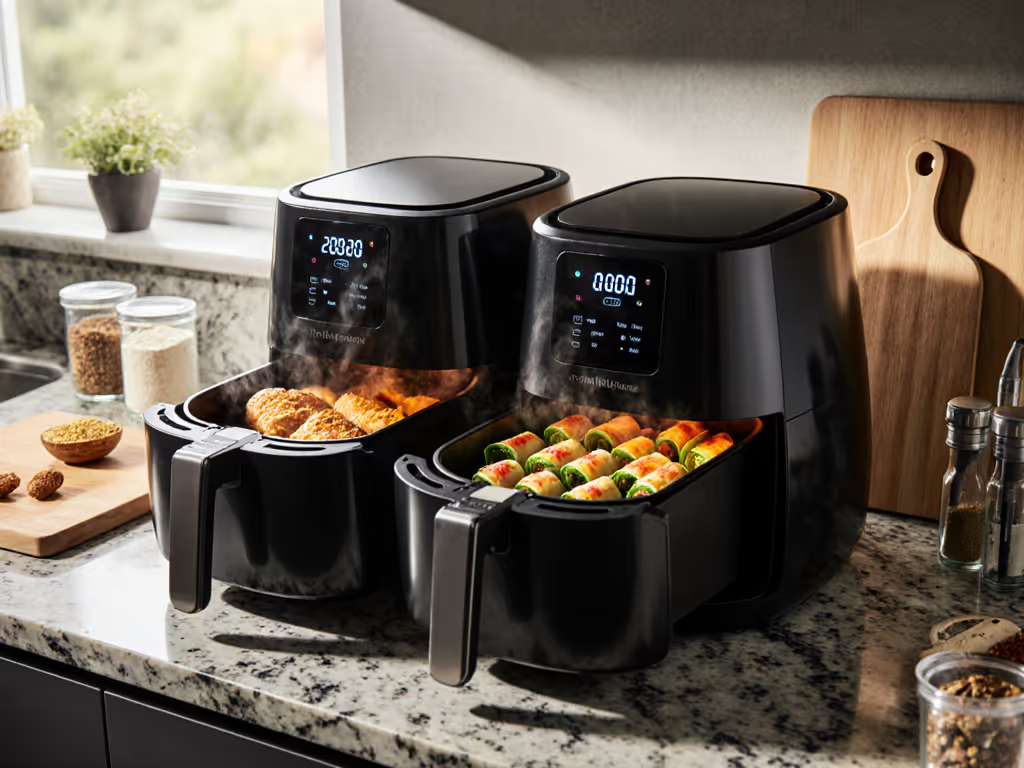
Air fryers rapidly circulate superheated air (typically 300-400°F) around food using powerful fans. This creates a Maillard reaction on the surface, replicating the crispy texture of deep frying without submerging food in oil. The result? Food with genuine texture evolution rather than mere temperature change.
Food-Specific Performance Analysis
Texture Comparison: Air Fryer vs Microwave
The "texture comparison air fryer microwave" isn't theoretical; it's measurable in your kitchen right now. I timed and assessed common foods across multiple appliances to develop this practical guide:
| Food Type | Air Fryer Result | Microwave Result | Time Difference |
|---|---|---|---|
| Pizza | Crisp crust restored, cheese properly melted, toppings retain texture | Soggy crust, rubbery cheese, toppings slide off | Air fryer: 3-4 minutes<br>Microwave: 1 minute |
| Cooked Chicken | Exterior crisps well but risks drying out interior | Heats quickly but creates rubbery texture | Air fryer: 4-5 minutes<br>Microwave: 1.5 minutes |
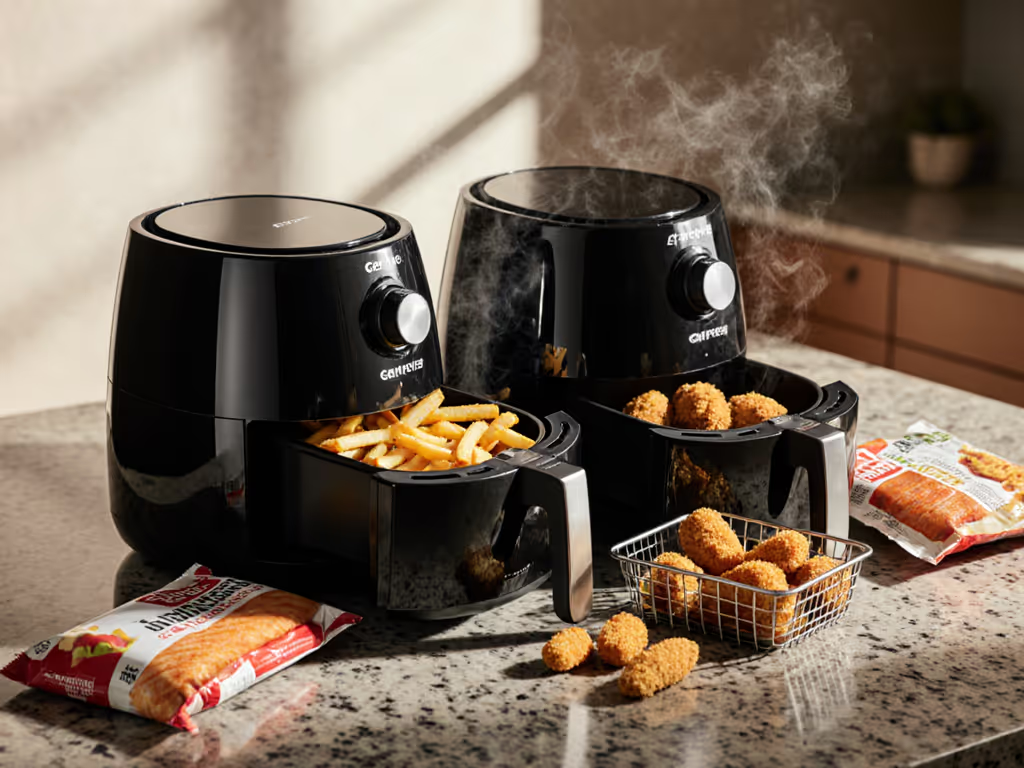
| French Fries | Crisp exterior maintained, golden color preserved | Soggy, limp, often greasy texture | Air fryer: 2-3 minutes<br>Microwave: 1 minute |
| Steamed Vegetables | Dries out too much, loses moisture | Maintains texture and moisture | Air fryer: 2 minutes<br>Microwave: 45 seconds |
| Soup/Broth | Not recommended (spills, uneven heating) | Ideal for quick reheating | Microwave: 90 seconds |
Critical Insight: It's Not One-Size-Fits-All
My tests revealed that neither appliance universally outperforms the other; your choice depends entirely on your food. Reheating pizza in air fryer scenarios consistently produced superior results, while microwaves maintained better moisture in protein-rich foods like chicken. See our batch cooking guide for which foods actually reheat well and how to fix the rest. This nuanced understanding prevents the "one appliance to rule them all" thinking that leads to kitchen clutter and unused gadgets.
Practical Kitchen Considerations
Beyond Speed and Texture: The Hidden Factors
When evaluating the best appliance for leftovers, your decision must account for real-world kitchen constraints:
Energy Efficiency Reality Check
While microwaves (700-1200 watts) typically use less power than air fryers (800-2000 watts), the energy efficiency reheating calculation isn't straightforward. An air fryer running for 4 minutes might use similar total energy as a microwave running for 1 minute due to different heating methods. The Panasonic NN-SN97JS with Inverter Technology delivers more consistent power at lower settings, reducing the need for multiple reheating cycles that waste energy. For broader context, our air fryer vs oven energy test breaks down real-world power use and timing.
Counter Space & Storage Footprint
Measure your actual available space, not the brochure claims. Air fryers require 3-4 inches of clearance on all sides for proper airflow, while microwaves need space above for ventilation. If you're choosing between form factors, start with our basket vs oven comparison to match capacity and footprint to your space. The Samsung MC12DB8700CKAA's compact 18.94 x 20.81 x 15.94 inch footprint makes it suitable for smaller kitchens, but verify clearance requirements before purchasing.
Cleanup Friction Analysis
Here's where most comparisons fail: they ignore the complete workflow. Air fryer baskets require handwashing (dishwasher-safe claims often don't account for crumb traps), while microwave interiors need wiping after each use. The Panasonic model's stainless steel interior resists staining better than standard microwave cavities, but requires different cleaning angles. Always time your complete cleanup cycle, not just the initial wipe.
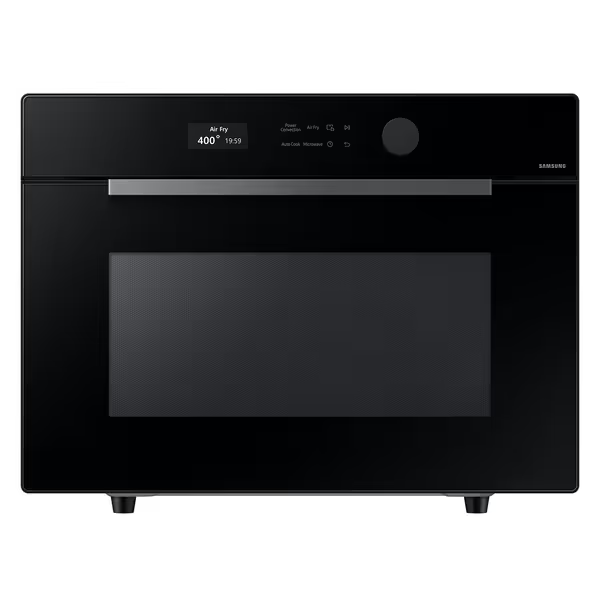
SAMSUNG Countertop Convection Microwave with Air Fry
Combination convection microwave & air fryer for versatile, healthier cooking.
$619
Capacity1.2 cu. ft.
Capacity1.2 cu. ft.
Pros
Versatile Power Convection, Air Fry, and PowerGrill Duo modes.
SmartThings Food offers guided cooking and recipe recommendations.
Wi-Fi and Voice Control for remote monitoring and operation.
Cons
Cooking times can be longer than expected for some functions.
Customers find the microwave oven works well and appreciate its aesthetic design.
Customers find the microwave oven works well and appreciate its aesthetic design.
Your Decision Framework
Which Appliance Serves Your Actual Kitchen?
Don't choose based on marketing hype; build your decision on measurable kitchen workflow factors. Ask these questions before investing:
- What percentage of your reheating involves crispy foods (pizza, fries, roasted vegetables) versus moist foods (soups, steamed dishes)?
- How many minutes per week are you willing to trade for superior texture?
- What's your actual counter space, including clearance requirements?
- How often do you batch-reheat multiple items sequentially?
If your answers indicate mostly quick reheating of diverse foods with minimal texture concerns, a microwave like the Panasonic NN-SN97JS offers superior versatility. Its Genius Sensor automatically adjusts power based on steam detection, eliminating guesswork for common reheating tasks.
For households prioritizing texture restoration in fried and roasted foods, an air fryer delivers unmatched results, but only if you accept the longer reheating times. The real advantage emerges when you track complete usage patterns: appliances you actually use become kitchen assets; those that create friction become counter clutter.
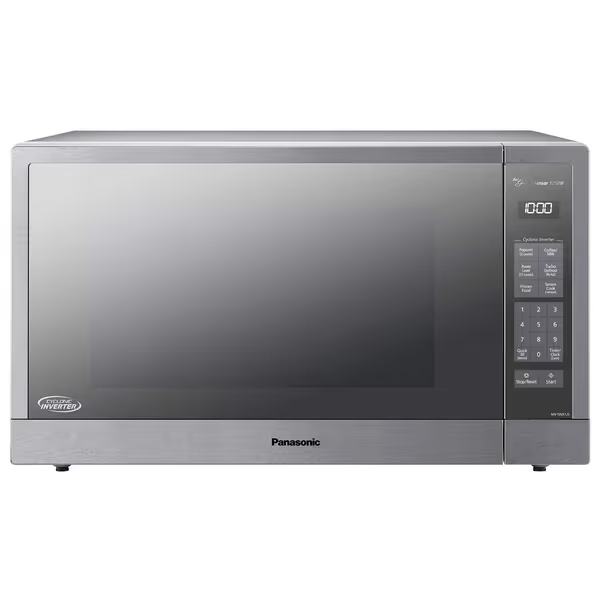
Panasonic Cyclonic Wave Microwave Oven
Evenly heats large dishes, preserving flavor with advanced inverter technology.
$439.95
Capacity2.2 Cu. Ft.
Capacity2.2 Cu. Ft.
Pros
Even heating with no cold spots for consistent results.
Spacious interior fits large casserole dishes.
Simple-to-use interface with appealing stainless steel design.
Cons
Mixed feedback on long-term functionality.
Customers find this microwave oven to be of high quality, with a spacious interior that can accommodate large casserole dishes, and appreciate its even heat distribution with no cold spots. The appliance is simple to use with improved user interface, and customers like its stainless steel appearance. The functionality receives mixed feedback - while some say it works well, others report it stopped working. The dial control receives mixed reactions, with some loving it while others miss traditional buttons.
Customers find this microwave oven to be of high quality, with a spacious interior that can accommodate large casserole dishes, and appreciate its even heat distribution with no cold spots. The appliance is simple to use with improved user interface, and customers like its stainless steel appearance. The functionality receives mixed feedback - while some say it works well, others report it stopped working. The dial control receives mixed reactions, with some loving it while others miss traditional buttons.
Making Your Choice Work for You
Workflow Optimization Strategies
Regardless of which appliance you choose, implement these systems to maximize effectiveness:
For Microwave Owners
- Place a paper towel over foods prone to splattering
- Use lower power settings (50-70%) for more even heating
- Rotate dishes halfway through for consistent results
- Let food stand 1-2 minutes after heating for temperature equalization
For Air Fryer Owners
- Preheat for 1-2 minutes for optimal crisping
- Avoid overcrowding the basket (critical for airflow)
- Shake or flip foods halfway through for even browning
- Use lower temperatures (275-300°F) for delicate reheating
Grip matters more than gloss. The most beautiful appliance becomes useless if its handles fight your grip, its basket refuses standard racks, or its cord snags during your workflow. Always test the physical interaction before committing.
Cleanup Protocol That Actually Works
Design your reheating process with the end in mind. For air fryers, immediately remove the basket after cooking while residual heat helps release stuck particles. Wait too long and debris hardens. For microwaves, place a glass of water inside for 2 minutes to loosen stubborn splatters before wiping. Time these steps: if cleanup exceeds 2 minutes regularly, you'll stop using the appliance.
Your Actionable Next Step
The 72-Hour Kitchen Audit
Before making any purchasing decision, conduct this practical test:
- Track your reheating needs for three days: note food types, quantity, and desired outcome
- Measure your available space with clearance requirements, not just the appliance footprint
- Calculate true time investment including prep, cooking, and cleanup for current methods
- Determine your texture priority - is crispness worth extra minutes for your most common foods?
If your audit reveals mostly quick reheating needs with texture being secondary, prioritize a quality microwave. If you frequently reheat crispy foods and value texture restoration over speed, an air fryer will serve you better. For many households, a convection microwave like the Samsung MC12DB8700CKAA represents the ideal compromise, offering both speed and crisping capability without doubling your counter footprint.
Remember the core principle: If cleanup is easy and safe, you'll actually use the machine. Your perfect appliance isn't the most feature-rich, it's the one that seamlessly integrates into your existing kitchen workflow, respects your space constraints, and delivers results you'll actually enjoy. The next time you're deciding between crispy leftovers or fast reheating, choose the option that fits your kitchen reality, not someone else's idealized version.
Related Articles