Air Fryer Stainless Steel Basket vs Liners: Which Lasts Longer?
By Maria López • 29th May
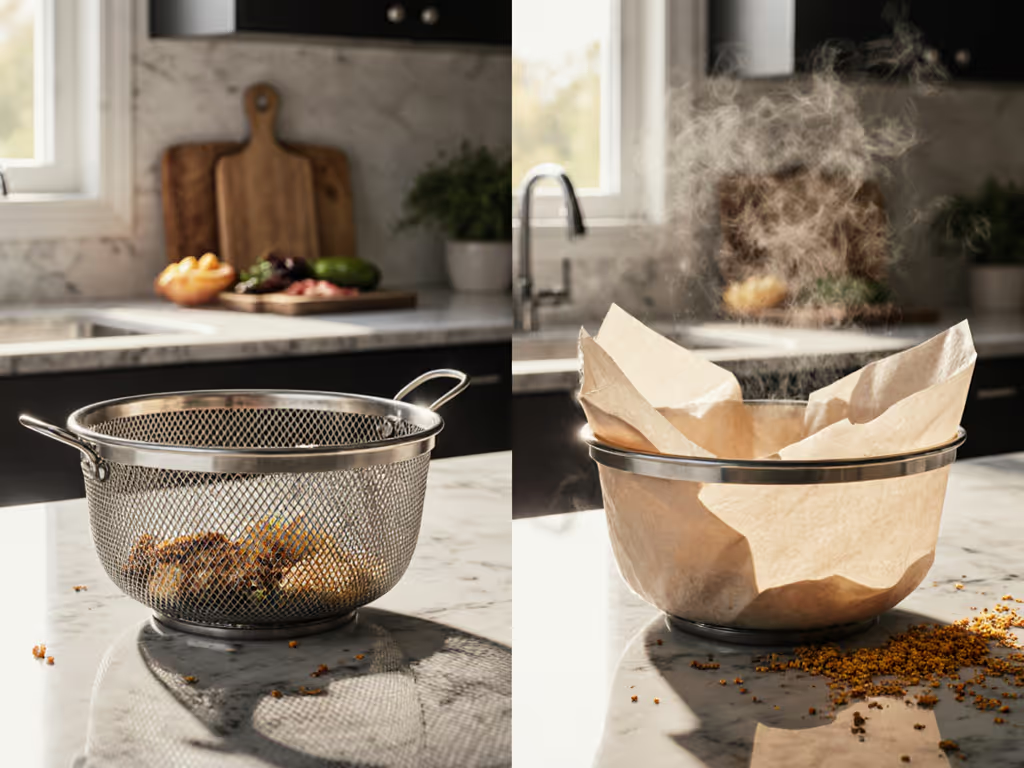
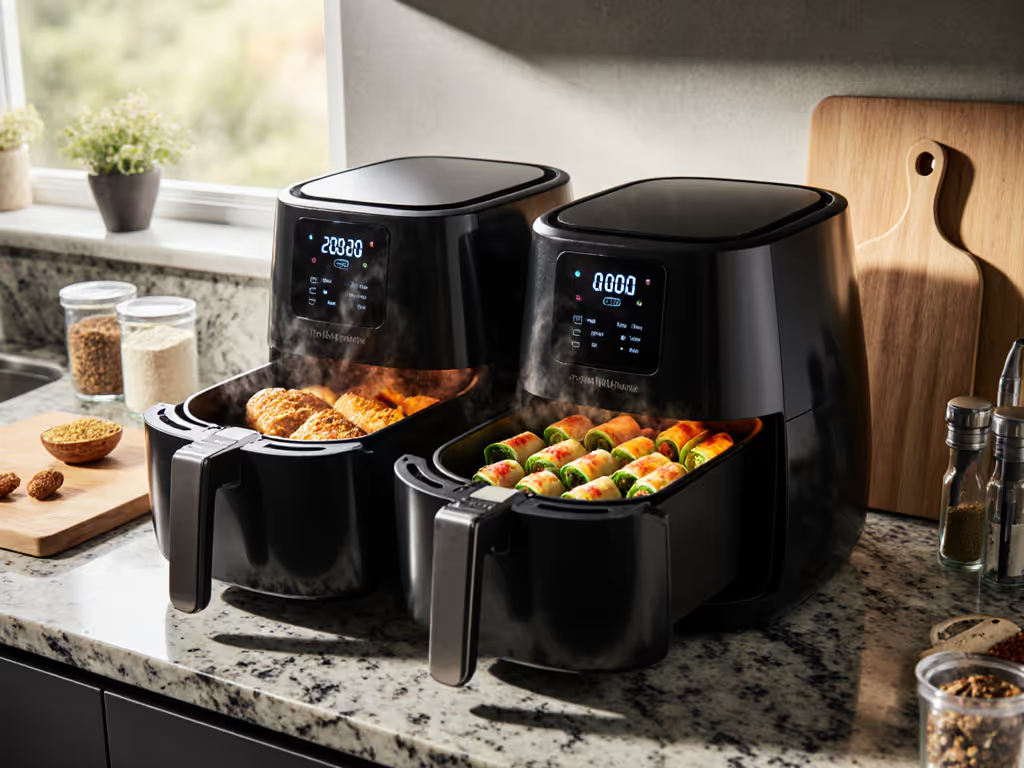
Busy kitchens burn through gear faster than any lab, so when you compare an air fryer stainless steel basket to air fryer basket liners, the real question is: which setup survives your weekly portions with the lowest cost per crispy batch?
Fit the food, then the budget.
Below is a data-framed, portion-based breakdown so you can decide if you should invest in stainless, stick with liners, or run a smart hybrid.
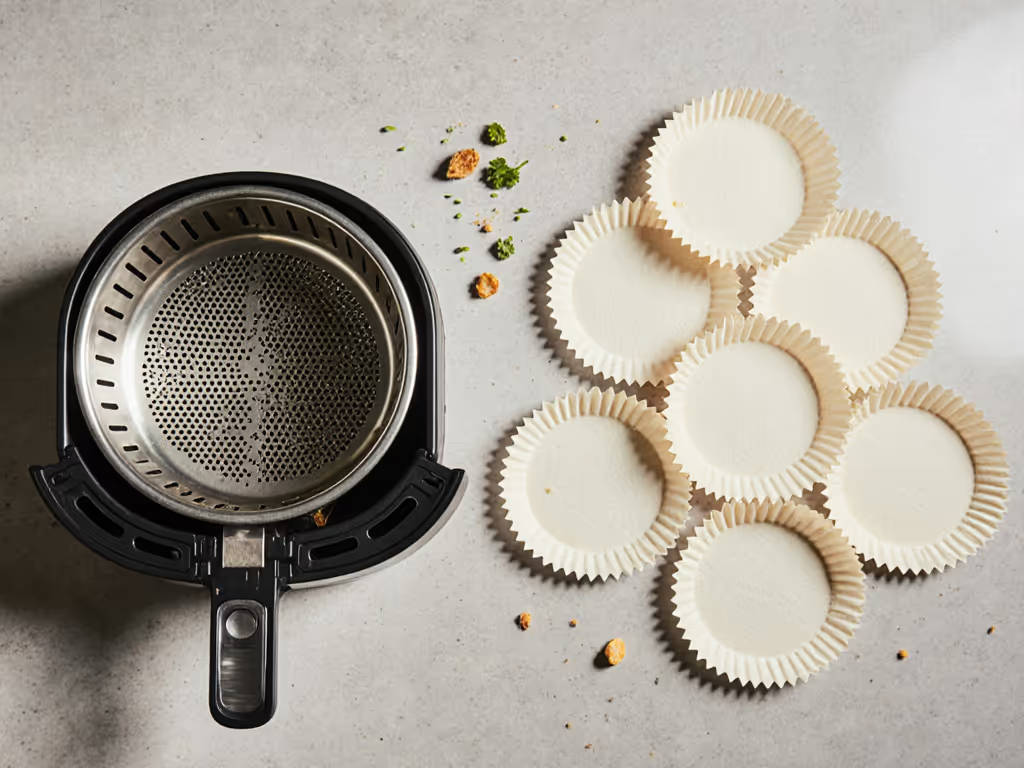
1. Know Your Contenders: What You're Really Comparing
Before we talk longevity, we need clean definitions. If you’re also choosing between form factors, see our basket vs oven air fryer guide.
Stainless steel basket setups usually mean:
- A factory basket made entirely of stainless steel (walls + mesh) with no nonstick coating.
- A replacement air fryer stainless steel basket swapped in for the original coated one.
A stainless basket is a permanent hardware choice; its lifespan is mostly limited by physical damage (warping, dents, weld failure).
Liner setups usually include:
- Disposable paper liners (flat or tub-style cups).
- Reusable silicone liners.
- Occasional use of foil (not ideal for airflow).
These are consumables or semi-consumables layered on top of the original basket. Longevity here is not "will it survive 5 years?" but "how many uses before it deforms, tears, or becomes unpleasant to cook with?"
Most stock baskets shipped with air fryers still use some kind of nonstick coating. A stainless steel basket replaces that variable with bare metal, while liners try to shield the coating you already have.
If you're trying to buy once, you're really comparing:
- One-time stainless basket cost + maybe very occasional liners
- Versus: original coated basket + ongoing liner spend
2. Coating vs Bare Metal: Which Fails First in Real Kitchens?
Every long-term air fryer user is quietly running their own nonstick coating longevity test. For brand-level reliability insights, check our longest-lasting air fryer brands analysis.
How coatings typically age
From expert reviews and user reports, nonstick-coated baskets tend to degrade from:
- Repeated high heat cycles
- Abrasive scrubbing
- Metal utensils
- Stacking and storage scratches
Once the coating chips or peels, two things happen:
- Food sticks more; you scrub harder; the damage accelerates.
- Many people become understandably uneasy about ingesting flakes.
A stainless steel basket removes the coating altogether. A buying guide for stainless baskets highlights durability and the ability to withstand heavy scrubbing without flaking. That means your "failure mode" shifts from chemical wear to simple metal fatigue or cosmetic discoloration.
Practical longevity translation
In household terms:
- Coated basket + no liners: often looks tired in 12-24 months of frequent use (4-7 meals/week) if scrubbed hard and used with metal tools.
- Coated basket + consistent liners: coating ages slower because it sees less abrasion and less direct food contact.
- Stainless steel basket (no coating) + scrub-safe tools: can stay structurally sound for many years; cosmetic darkening doesn't usually affect performance.
From a pure wear standpoint, bare stainless usually outlives both the coating and any reusable liner.
3. Basket Material Durability Comparison: Steel vs Silicone vs Paper
If we zoom out into a basket material durability comparison, you get three very different profiles.
Stainless steel baskets
Strengths:
- High heat tolerance well above typical air fryer temps.
- Can handle steel wool or stiff brushes without functional damage (minor scratching is cosmetic).
- No risk of melting, and warping is rare when built well.
Weak points:
- Cheap, thin stainless can warp under constant max-temp use.
- Mesh welds or joints are the usual failure point if you overload with heavy items.
Reusable silicone liners
Strengths:
- Rated for typical air fryer temps; flexible and non-reactive.
- Nonstick without coatings; baked-on residue usually peels off.
Weak points:
- Can sag, bow, or permanently deform if overloaded or folded in storage.
- Sharp tools can slice them; colored silicone can stain with turmeric, tomato, or heavy oils.
Disposable paper liners
Strengths:
- Zero wash-up; you throw the mess away.
- No long-term staining or build-up.
Weak points:
- Single-use by design; they tear, burn, or oil-soak.
- If overloaded or not weighed down by food, they can fly up into the heating element.
From a years-of-service per dollar perspective, stainless steel is the only component with a credible 5+ year lifespan. Liners live in days or months, not years.
4. Performance and Crispness: Does Stainless or a Liner Cook Better?
Longevity isn't just "does it physically exist," it's also "does it keep cooking well."
Stainless steel basket performance
A stainless mesh or perforated basket exposes more metal surface and maximizes venting. In practice, that means:
- Strong airflow around food
- Consistent browning on contact points
- Less risk of hot spots from flaking coating
Stainless doesn't insulate; it transfers heat quickly and lets fat drip away efficiently, both helpful for crispness.
How liners change the airflow
- Silicone liners insulate more than steel. That can soften crispness unless the liner has many perforations. You may need 1-3 extra minutes per batch to get the same level of browning.
- Paper liners block direct airflow wherever they aren't perforated. On the plus side, they catch grease and breadcrumbs; on the minus, they can slightly slow down crisping of the underside.
The practical cost of this is energy: every extra minute at 1400-1800 watts is electricity you pay for. For typical wattage and runtime savings, read our air fryer vs oven energy comparison. That's small for one batch, but if liners add even 2 minutes to a 12-minute cycle, that's about 17% more runtime per batch, enough to show up on your bill over a year if you air fry several times a week.
Buy once means matching portions, not chasing promo watts.
Durable gear that finishes food in fewer minutes per portion quietly wins the energy race.
5. Cleanup Realities: Time vs Scrubbing vs Smell
People often buy liners to avoid one thing: the greasy sink. For step-by-step upkeep, follow our air fryer cleaning guide.
Stainless workflow
A stainless steel basket tolerates:
- Stainless scrubbing pads
- Soaks in hot, soapy water
- Dishwasher cycles, assuming your manufacturer allows it
Because there's no coating to baby, you can remove baked-on residue aggressively. The trade-off is you will do that scrub unless you accept patina.
Liner workflow
- Paper liners: you lift, toss, wipe a thin film off the basket, then you're done.
- Silicone liners: you still wash something, but it's soft, light, and can go through the dishwasher. However, silicone can hold onto aromas (garlic, fish) longer than steel.
From a longevity angle, liners preserve the basket's surface. From a lived-experience angle, they shift your cleanup from "hard scrub occasionally" to "quick wipe every time." The right choice depends on whether your bottleneck is elbow grease or the number of items you're washing.
6. Cost Over 3 Years: Which Setup Is Cheaper Per Portion?
Let's run a simple, realistic cost-per-portion comparison. Numbers will vary by region, but the structure holds.
Assume:
- Stainless replacement basket: $40-$60 once.
- Silicone liner: $12-$20 for one good-quality piece.
- Paper liners: $10 for a pack of 100.
- You air fry 4 times per week ≈ 200 uses per year.
Scenario A: Stainless basket, no liners
- Upfront: $50 (midpoint)
- 3-year cost: still ~$50 unless you damage it
- Uses: 600 (200/year x 3)
Cost per use: about 8 cents.
Scenario B: Coated basket + paper liners every time
- Upfront: $0 (using stock basket you already own)
- Liners: 600 uses / 100 per pack = 6 packs x $10 = $60
- Coated basket likely ages better thanks to protection, but may still need replacing if coating fails.
Cost per use for liners alone: about 10 cents, plus eventual basket replacement.
Scenario C: Stainless basket + paper liners only for messy cooks (1 in 3 uses)
- Stainless basket: $50
- Liners: 200 liner uses in 3 years ≈ 2 packs = $20
Total: $70 over 600 uses ≈ 12 cents per use. But this includes the long-life basket. After year 3, your per-use cost drops more every year because the basket is already paid for.
In other words, over a 3-year window, stainless alone or stainless plus selective liners usually beats full-time paper liners once you include basket replacement. The sweet spot for many families is a durable stainless basket plus occasional liner use for extra-saucy, sugary, or cheesy foods.
7. Health & Non-Toxic Considerations: Steel, Liners, or Glass?
For many households, the question is not just longevity, but also materials.
Stainless vs coatings
- Stainless steel is inert for most users and widely used in pans and commercial kitchens.
- Traditional nonstick coatings can chip under hard use; that's why so many buyers look for ways to reduce direct scraping on them.
Going stainless removes the coating from the equation. You still need to manage grease and smoke, but not coating wear.
Silicone and paper liners
- Quality silicone liners are generally stable at typical air fryer temps, but you have to respect the manufacturer's max temperature.
- Paper liners need to be used correctly (fully weighed down with food, not preheated empty) to avoid scorching.
Where "best non toxic glass air fryer" fits in
If your top priority is avoiding both coatings and metals, you may be eyeing the best non toxic glass air fryer options, typically glass-bowl convection ovens with a heating head. These replace both baskets and liners with a washable glass vessel.
Glass-bowl units tend to be:
- Easy to inspect for cleanliness (no hidden corners)
- Fully free of nonstick coatings and metals near food
But they trade off:
- More counter space
- Different airflow patterns and rack setups
If you're already in a solid basket-style air fryer, upgrading to a stainless steel basket plus smart liner use is usually the more cost-effective move than replacing the entire unit with glass.
8. Throughput & Capacity: How Liners and Steel Affect Real Portions
This is where my own price-to-portion obsession comes in. I once chased a spectacular doorbuster only to discover that the cheap basket, the extra liners, and the energy waste cost more than the premium model I'd skipped. After several return labels and too many greasy sinks, I stopped chasing discounts and started matching capacity and accessories to actual weekly throughput.
Here's how that logic applies to stainless vs liners:
Usable surface area
- A snug stainless steel basket keeps your original capacity. If the mesh or perforations match your stock basket, your "how many wings per layer" number stays the same.
- Deep, tub-style liners (especially silicone) can effectively shrink your usable area by adding thick walls and raising food higher, closer to the element.
In practice, that can mean:
- 1-2 fewer cutlets or 4-6 fewer wings per batch.
- More total batches to feed your group, which stresses your time and energy use.
Stackability and racks
If you use stacking racks, stainless baskets generally play nicely because the structure is rigid. To stack without sacrificing crispness, see master air fryer stacking. Some floppy liners don't support racks safely.
If your pain point is throughput (food for 3-5 people getting cold while you run multiple waves), shrinking capacity with thick liners is usually the wrong trade.
Fit the food, then the budget.
9. Simple Yes/No Gates: Who Should Prioritize Stainless vs Liners?
Use these plain-language gates to avoid overthinking.
Prioritize a stainless steel basket if:
- You cook 3+ times per week in the air fryer.
- You've already seen coating wear or flaking on a previous unit.
- You're okay with occasional vigorous scrubbing and a bit of patina.
- You rarely need sugary glazes or cheese that welds onto surfaces.
If you answered yes to at least three of those, stainless will likely win on longevity and cost.
Prioritize liners if:
- You mainly air fry sticky, cheesy, sugary foods.
- You have limited hand strength or mobility, and scrubbing is physically taxing.
- Your current basket is coated, still in good shape, and you want to extend its life.
- Your biggest frustration is grease and crumbs in the sink, not upfront cost.
If that's you, using liners to shield the existing basket can push coating failure further into the future.
Hybrid strategy (my usual recommendation)
A hybrid approach looks like this:
- Invest in a stainless steel basket as your long-term workhorse.
- Keep paper liners on hand for the 20-30% of cooks that are especially messy.
- Skip silicone liners unless you have a very specific reason (for example, you can't use disposables, or you need color-coded liners for allergens).
That keeps your per-use cost low, your scrubbing workload manageable, and your long-term durability high.
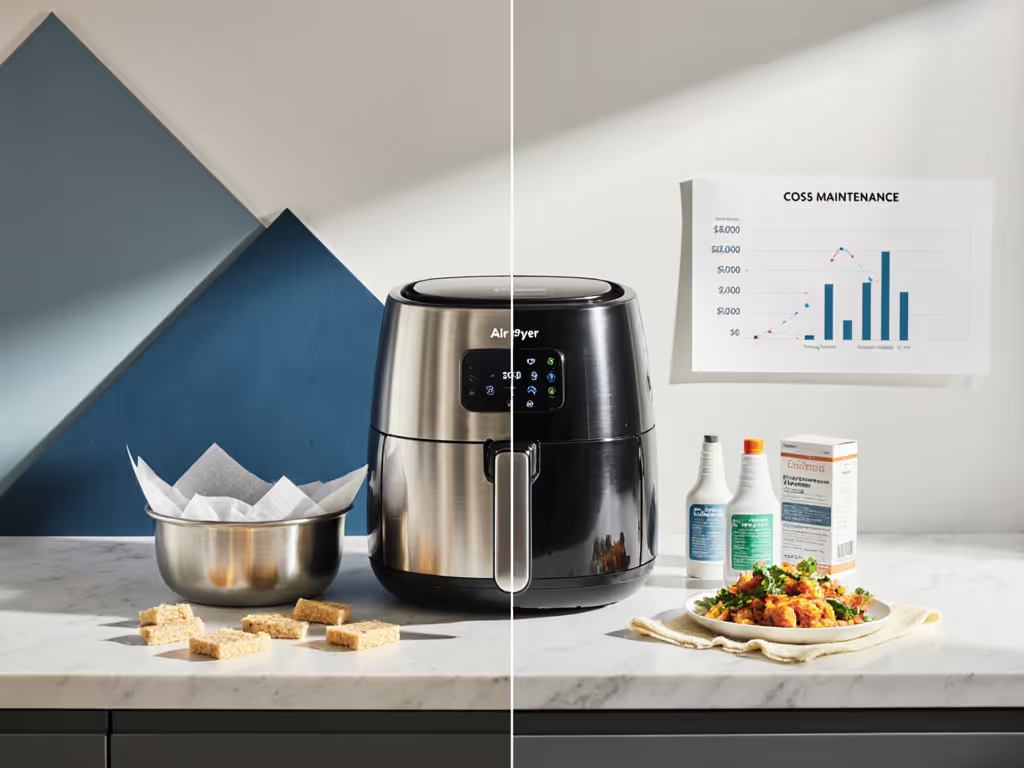
10. Your Next Step: 5-Minute Basket & Liner Audit
To turn this into an actual decision instead of more research, take five minutes and walk through this checklist in your kitchen.
- Count your weekly uses. Over a typical week, how many times do you reach for the air fryer? Multiply that by 52 to understand how hard you are on baskets annually.
- Inspect your current basket. Look for:
- Any coating chips or scratches
- Rust marks or warped areas
- Build-up you've been unable to scrub off
- List your top 10 air fryer meals. Mark which ones are clean (dry rubs, frozen fries, plain veg) and which are messy (marinades, cheese, sugary sauces).
- Estimate liner use. If you had them, would you use liners for all 10, or just the messy ones? That tells you whether you're a full-time liner or a selective liner household.
- Do a quick cost sketch.
- Stainless basket price from a reputable guide or retailer.
- Liner prices for 1 year of your projected use.
- Divide each by your annual portions to get cost per portion.
Then apply this rule of thumb:
- If your projected liner spend over 2-3 years is close to or above the cost of a good stainless steel basket, and your household uses the air fryer multiple times per week, stainless (plus occasional liners) is usually the smarter buy-once move.
- If you air fry lightly (1-2 times per week) and mostly messy foods, liners may keep your existing coated basket alive long enough that a stainless swap never pays back.
Use that per-portion math to decide. Accessories that match your real portions and cooking patterns beat any coupon. Buy once means matching portions, not chasing promo watts.
Related Articles